Wednesday, August 10, 2011

Avocadoes Against Cancer

From American Dietetic Association that, Avocadoes contain heart-healthy monounsaturated fats, That promote healthy vision and potentially protect against cancer also packed with folate; vitamins E, C and B6; potassium; and soluble fiber as well as nutrients that reduce cholesterol levels. Eating ¼ avocado you'll have about 95 Calories.

This recipe of Kale Avocado Salad From Laurel On Health Food  is very simple to make and you'll like crunchiness in salad.

Kale Avocado Salad

 Salad:
2 cups torn green kale ½ avocado, pitted, peeled, coarsely chopped ½ cup shredded carrots 2 tbsp currants 2 tbsp sunflower seeds
1½ tbsp olive oil
1 tbsp lemon juice
pinch of sea salt and black pepper

Dressing:

1. Whisk together olive oil, lemon juice, salt and pepper. Set aside.
2. Tear kale into bite-size pieces and place in a large bowl. Using your hands, gently massage the chopped avocado into the kale until well coated.
3. Add carrots, raisins, and sunflower seeds to the kale and avocado. Mix to combine. Drizzle salad with dressing.

Thursday, August 4, 2011

Snacks Both Affordable And Healthy

Try these snacks certified nutritionist, health risks of sugar before your stomach starts to growl and scratch! Put your mind to eat healthy foods every day. Fill unfilled promise.


"The avocado is a heart healthy alternative, rich in folate, vitamin E, C and B6, potassium and soluble fiber," according to the American Dietetic Association. "They also contain heart-healthy unsaturated fat, and nutrients, which reduce cholesterol levels, promote the vision, and possibly protect against cancer."


This smoothie recipe from Laurel On Health Food is great for the skin. Coconut water and avocado will keep you hydrated and silky. 


Monday, August 1, 2011

Ginger Anti-Cancer Properties

Researchers at the University of Michigan, Some recent discoveries: • Ginger has anti-cancer properties. 


Said recently that it deems to be of ovarian cancer cells at bay - in a test tube. (This is far from saying that ginger can prevent cancer, though.) • can prevent bacterial growth. For example, in a laboratory study, reduced the bacterium H. pylor4 responsible for most stomach ulcers and stomach cancer perhaps. • In one study, asthmatics who took ginger reported fewer symptoms, but found no evidence of changes in lung function. • Ginger has anti-inflammatory properties and can therefore be a useful remedy for arthritis. • Ginger does not seem to relieve nausea and vomiting during pregnancy, motion sickness and chemotherapy. 


What to do if you want to try ginger for nausea and vomiting, you can buy ginger capsules. But keep in mind the ginger can cause major digestive problems and nausea. instead of treating them.You can try the candied ginger or ginger tea. Most bottled ginger ginger also contain little or none.

Thursday, May 5, 2011

Prevent Bladder Cancer

This post was originally published as  Eat Yogurt, Avoid Bladder Cancer by Laurel on Health Food blog.

If you love yogurt, you’re in luck. You probably already know it’s good for you, but I found a recent Swedish study that gives us more evidence. Researchers at the Karolinska Institute in Stockholm studied the diets of 80,000 patients in a nine-year span and published their findings in The American Journal of Clinical Nutrition.

They concluded that women who consumed two servings of yogurt every day were 45% less likely to develop bladder cancer than those who only eat it occasionally or not at all (36% for men). What’s interesting is that the researchers found no protective benefit in other dairy products. It was only the yogurt or cultured milk products with lactic acid bacteria.
Lead study author Alicja Wolk, Ph.D., says the probiotic called lactobacillus in cultured dairy products could be responsible for providing these protective benefits. (Ref: Women’s Health, March 2009, p. 28)

Of course, it’s safe to say that most people who eat yogurt probably lead healthier lifestyles, but the findings are still significant. Yeah!

Monday, April 4, 2011

Reduce Cancer Risk

This post was originally published as  Diary of My Fruits and Veggies by Laurel on Health Food blog.

If you really think about it, how many servings of fruits and vegetables do you actually eat every day? Most recent recommendations say we should aim for about eight to nine servings each day. However, a recent study from Harvard University found that just five daily servings will help men and women reduce their risk of stroke by 31%. A nutrition professor at the University of New Haven, Rosa Mo, RD, says that five servings a day gives you “significant antioxidants and fiber to reduce heart disease and cancer risk and keep your weight in check.”

That’s great news! However, I’d rather us think we need those eight to nine servings so we shoot for the stars. Most people probably have one piece of fruit and one (maybe two) servings of vegetables a day. There are even those who swear off fruits and vegetables all together. Sigh.
So, what’s in a single serving? Here are a few examples: 1/2 cup raw, frozen, cooked, or canned fruit or vegetables, 3/4 cup 100% fruit juice, 1 cup raw leafy greens, 1/4 cup dried fruit, one medium sized fruit.


For me, I think I do a pretty good job getting my fruits and veggies in, but like any normal person, I have my good days and bad days. So today I decided to begin a fruit and veggie diary. Instead of a diary listing ALL the foods I eat (which I find really hard to keep up with in the long term), I am going to keep track of every fruit and vegetable I eat (100% fruit juices count).
To help me out, I made a small spreadsheet and I’m keeping it in my Google docs. I split it up into different color groups so I make sure to get a variety of nutrients. You can view it here (I filled in Monday as a sample):

You can also check out this page from the Sanitarium Health Food Company to get an idea of the different color groups, examples, and what nutrition they provide.

Wednesday, February 2, 2011

Cancer Fighting Veggies

This post was originally published as The Best Cancer-Fighting Veggies by Laurel on Health Food blog.


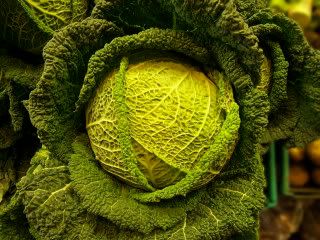
A study from the Sainte-Justine Hospital in Montreal found that cruciferous vegetables have the best cancer-fighting potential out of 34 vegetables tested (Self.com, May 2009, p. 112). The reason? Cruciferous veggies such as broccoli, kale, brussels sprout, swiss chard, cabbage, and cauliflower have the highest level of glucosinates. These chemicals work to keep your cells healthy by protecting them against free radical damage.

If you want to read further evidence on cruciferous veggies and their cancer-fighting potential, check out this WedMD page: The Super-Veggies: Cruciferous Vegetables. If you find it hard to make yourself eat a big bowl of vegetables, remember that you can sneak them into some dishes that you are used to eating. Add kale or cabbage to rice or a stir-fry dish, or add broccoli and cauliflower to your next bowl of soup. Raw greens are also nice on a sandwich as a replacement for lettuce.

Wednesday, January 5, 2011

Anti-Cancer Mushrooms

This post was originally published as  Mushroom Love by Laurel on Health Food blog.
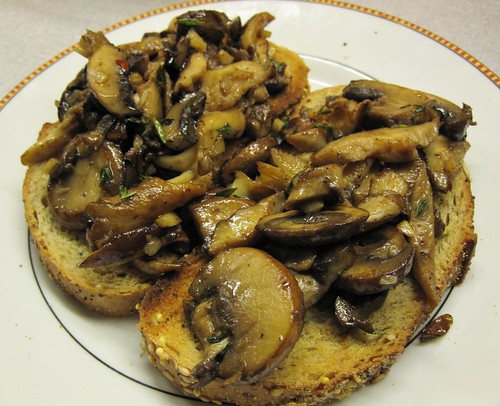
During vacation I caught one of Jamie Oliver’s food shows, Jamie at Home, on the Food Network and it was an episode all about mushrooms. Jamie knows a guy who’s a wild mushroom expert, and the two of them went out in the woods to pick fresh wild mushrooms for the recipes. One of my favorites was a simple mushroom bruschetta that they made sitting right in the middle of the forest with a portable sauté pan. Awesome. My sister and I were drooling over it!

Mushroom BruschettaMushrooms are a super healthy food packed with iron, zinc, fiber, antioxidants, and more. They are low in calories and make a great substitute for meat (such as a portobello mushroom burger). Research shows they have strong anti-cancer and anti-inflammatory properties as well as several other disease fighting benefits.

Here’s a link to Jamie’s Ultimate Mushroom Bruschetta. I made it last weekend using a mix of shiitake, portobello, and oyster mushrooms. I left out the parsley and used extra fresh thyme leaves since I had it in the house. I also used whole grain bread and a small pinch of red pepper flakes instead of a dried chili.